
Solving Excess Inventory: Why We Invested in BackChannel
Excess inventory is one of the largest, most overlooked inefficiencies in retail.

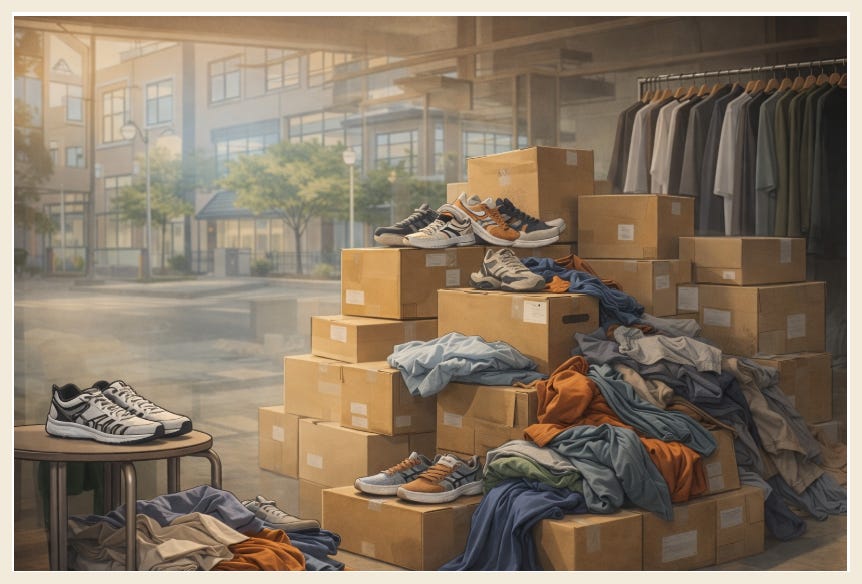
Brands and distributors are often left with products that still have value but are hard to move without losing margin, control, or brand equity. At the same time, many retailers want access to branded merchandise but lack efficient sourcing channels. Most of this market still relies on fragmented, offline processes, even as waste costs continue to rise. In textiles alone, 92 million tons of waste are generated each year.
That is why we invested in BackChannel.
BackChannel is building a B2B marketplace for excess inventory in Brazil, helping brands and distributors monetize overstock more efficiently while giving retailers access to products from large brands. The value proposition is clear on both sides: sellers access a more structured and controlled distribution channel, while buyers access new and exciting merchandise that has historically been hard to source. At the same time, the company is developing proprietary technology across pricing, matching, transactions, and logistics, creating a stronger, more defensible platform over time. Just as important, it is doing so with real discipline, as a capital-efficient marketplace with validated unit economics.
The bottleneck: liquidation is still broken
The problem is not a lack of demand. It is a lack of structure.
Traditional liquidation channels are opaque, slow, and hard to control. Sellers need liquidity without losing pricing power or damaging brand equity. Buyers want good inventory, but without relying on informal networks or inconsistent supply. BackChannel is solving that coordination problem with a purpose-built marketplace that helps brands discreetly move excess stock to vetted retailers. Its product is built to improve pricing control, streamline transactions, and reduce friction for both sides.
BackChannel’s breakthrough: a better channel for both sides
What makes BackChannel especially compelling is the business quality underneath the marketplace.
The company ended 2025 with R$25 million in annualized GMV, more than 300,000 items transacted, and more than 1,000 active buyers. For 2026, it is targeting more than R$150 million in annualized GMV. Just as important, it is doing so with positive unit economics and contribution margins of 8%-10%. We appreciate marketplaces that demonstrate operating discipline early, and BackChannel has done so from the start. Its broader model is asset-light, does not rely on holding inventory, and is on track to validate that growth and fundamentals can go hand in hand.
Why now, and why BackChannel
What especially excited us is the team.
Guille Freire and Guille Arslanian previously built Trocafone, Brazil’s leading refurbished electronics platform, and that experience is directly relevant here. They understand the complexity of secondary markets and how to build with discipline in categories shaped by logistics, pricing, and trust. BackChannel is applying that experience to a market where brands need better ways to recover value from unsold goods.
This timing matters too. BackChannel is helping create a more structured channel for excess inventory, while extending the life of products that might otherwise remain stranded or lose value unnecessarily. We also appreciate that the sustainability angle is rooted in economics: better recovery, less waste, and a more circular retail system can coexist.
We are proud to back Guille Freire, Guille Arslanian, and the BackChannel team as they build a more efficient and less wasteful retail system in Brazil. We are also excited to lead the Seed round and invest alongside great co-investors, including Accion Ventures, Cathay Latam, Morro Ventures, Ignia, Positive Ventures, and Savia.