

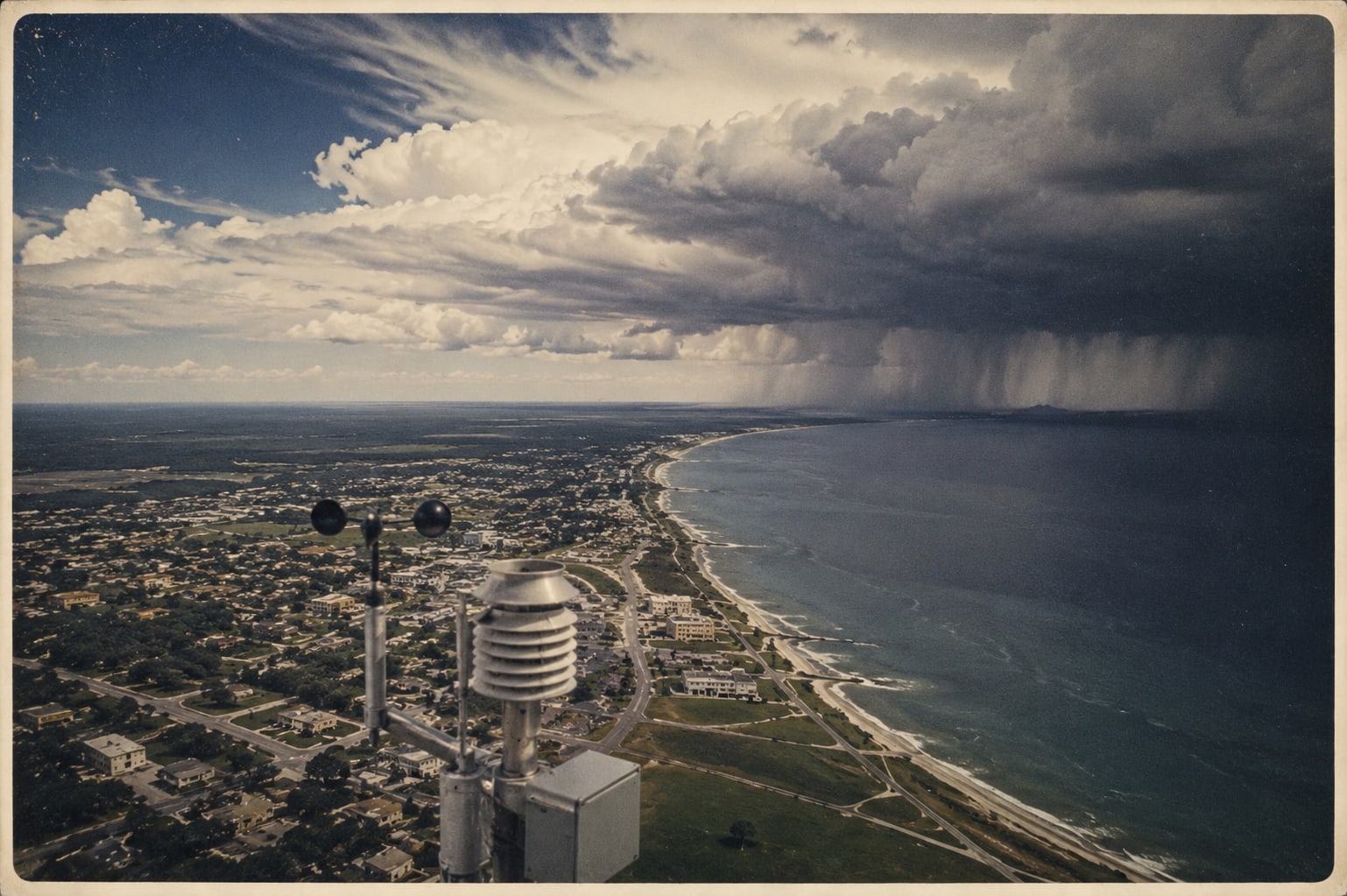
The US property and casualty market is pulling back from states with the highest weather exposure. Average outage hours have more than doubled over the past decade. The losses are no longer tail events: they are the baseline.
Most business interruption policies require physical damage before a claim triggers. A grid outage that closes a restaurant or spoils a clinic’s refrigerated inventory is rarely covered. Most commercial businesses are self-insuring their entire grid-outage exposure today.
Adaptive Insurance is a climate-focused managing general agent building parametric products for businesses exposed to weather and infrastructure risk. We invested because the structural gap is real, the product design fits it, and this team has built and scaled insurance products before.
The bottleneck: coverage structure designed for a different era
Standard commercial policies cover physical damage: fire, flood, something that breaks on your property. A grid failure that shuts you down for three days doesn’t qualify. No damage, no claim.
As we shared in our climate risk thesis, carriers are pulling back from the highest-risk states. The opportunity is in the products that fill the space they’re leaving behind.
Adaptive’s breakthrough: address-level intelligence, automatic claims
GridProtect is parametric power outage coverage for commercial businesses. When an outage at a policyholder’s address exceeds a defined threshold, a payout triggers automatically. No claim to file, no adjuster, no proof of physical damage.
Underneath GridProtect is Omnia, Adaptive’s proprietary data platform. It scores every North American address for power and weather risk across 18 perils using real-time utility grid monitoring. Omnia solves the basis risk problem that constrained earlier parametric products, and it licenses to external carriers, adding a data revenue layer on top of the MGA commission structure.
Why now, and why Adaptive
CEO Mike Gulla and CTO Arik Yelovitch were among the first ten employees at Hippo Insurance, where they saw firsthand what breaks when a climate-exposed product is built on legacy insurance structure. At Adaptive, they built a structurally different model: an MGA with a licensed data platform underneath it. The broader team brings deep roots across Hippo, American Family, and Palomar, with Rick McCathron, the sitting CEO of Hippo, as an advisor.
The timing is structural. Grid deterioration has no near-term reversal. Carriers are leaving the highest-risk states. Parametric structures are gaining acceptance as buyers and regulators grow comfortable with trigger-based products.
In Closing the Gap, we argued that the next generation of climate companies will build financial products that transfer and price risk. Adaptive is one of them.
Adaptive joins a growing group of Sunna portfolio companies working on the infrastructure climate adaptation requires.